mP Table is reservations, card guarantee, voucher shop and operations cockpit in one system. Embedded in your own site, built around your table and shift plan - no commission, no foreign brand.
Live at Stiftskulinarium St. Peter - Quandoo replaced in live operation, historical reservations migrated, switched over on a set date.
You use a portal - and pay commission on your own regulars. The booking form doesn't know your table plan. Shift changes, walk-ins, large groups: all workarounds around software built for somebody else. The data belongs to the provider, not to you.
The booking widget sits directly in your existing site - your brand, your domain. Behind it runs the whole operation: table and station plan, shifts, card guarantee against no-shows, voucher sales, wallet passes for your guests and dashboards for kitchen, service and management. Switching from an existing system is proven in live operation - at Stiftskulinarium St. Peter we replaced Quandoo with it.
Guests book with you, not with a portal.
Embedded in your existing website, in German and English. Your brand, your domain, no detour.
What can be booked online is exactly what is free on the table plan. No double bookings, no manual upkeep.
Guests change their reservation themselves. When an evening is full, they join the waitlist and move up as soon as a table frees up.
The reservation lands as a pass in Apple Wallet or Google Wallet. On arrival, one scan is enough.
An empty table costs twice. mP Table secures it.
From a group size, on certain days or in single shifts, guests leave a card. You set the rules.
Per person or per table, for example for set-menu evenings and banquets.
Anyone who does not turn up lands on a list of their own. You decide case by case: free of charge or a fee.
Above an occupancy threshold, mP Table spreads arrivals so kitchen and service are not overrun in the same quarter hour.
Revenue that is paid before anyone arrives.
Guests buy vouchers directly from you, pay online and print them at home. No platform cut.
Scan the voucher QR or enter the code, right on the table plan. No slips, no recalculating.
Large groups across several tables, with their own banquet capacity, separate from à la carte.
Sold and redeemed vouchers at a glance, as a weekly report by email if you like.
The operation in view - now, not at month's end.
Drag and drop, with templates per weekday. A plan carries over to next year.
Opening hours, shift changes, holidays. Special opening hours repeat every year if you want.
Block tables, shifts or days with one click. Put walk-ins straight into the plan.
The day's key figures and peaks in your inbox, the individual bookings as a spreadsheet attached.
Portals bring reach and charge per booking - permanently. Above a certain volume the maths flips, and guest data is better off with you than with the platform. The honest comparison:
| Booking portal | mP Table | |
|---|---|---|
| Cost | Commission per booking, forever | One-off investment, only hosting after that |
| Guest data | Sits with the portal | Sits with you - email, frequency, preferences |
| Domain and brand | Booking on the portal page | Widget on your site, your brand, no drop-off |
| Advertising and measurement | Booking runs through the portal, measurement depends on its interfaces | Reservations report back to your ad accounts at Google and Meta |
| Table plan and shifts | Standard grid | Your house: stations, shift models, groups, walk-ins |
| Switching | Contract lock-in | Parallel run, migration, cut-over day - proven at Stiftskulinarium St. Peter |
Portals are a good start for many houses. We calculate the booking volume at which your own system pays off - before anyone builds anything.
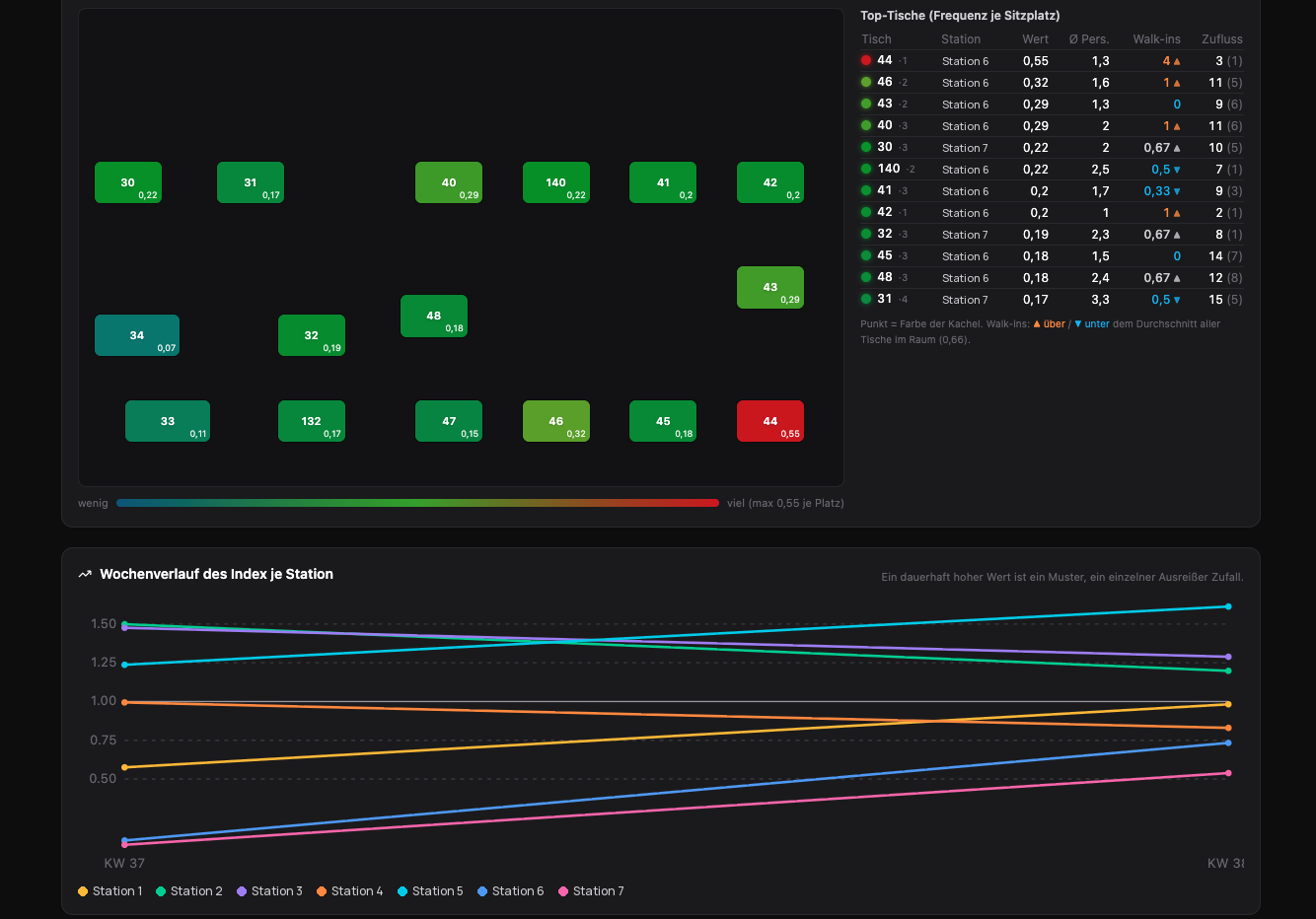
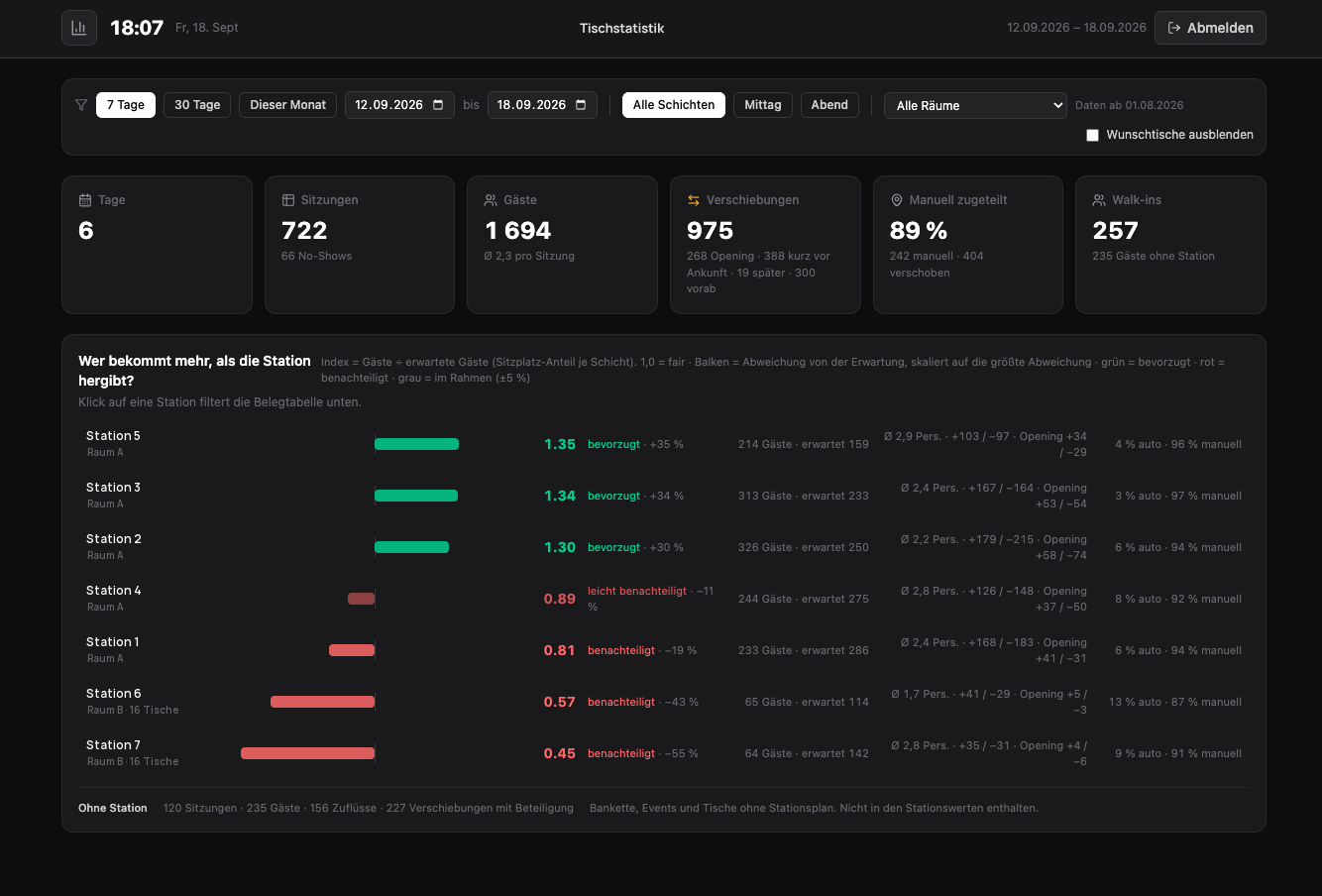
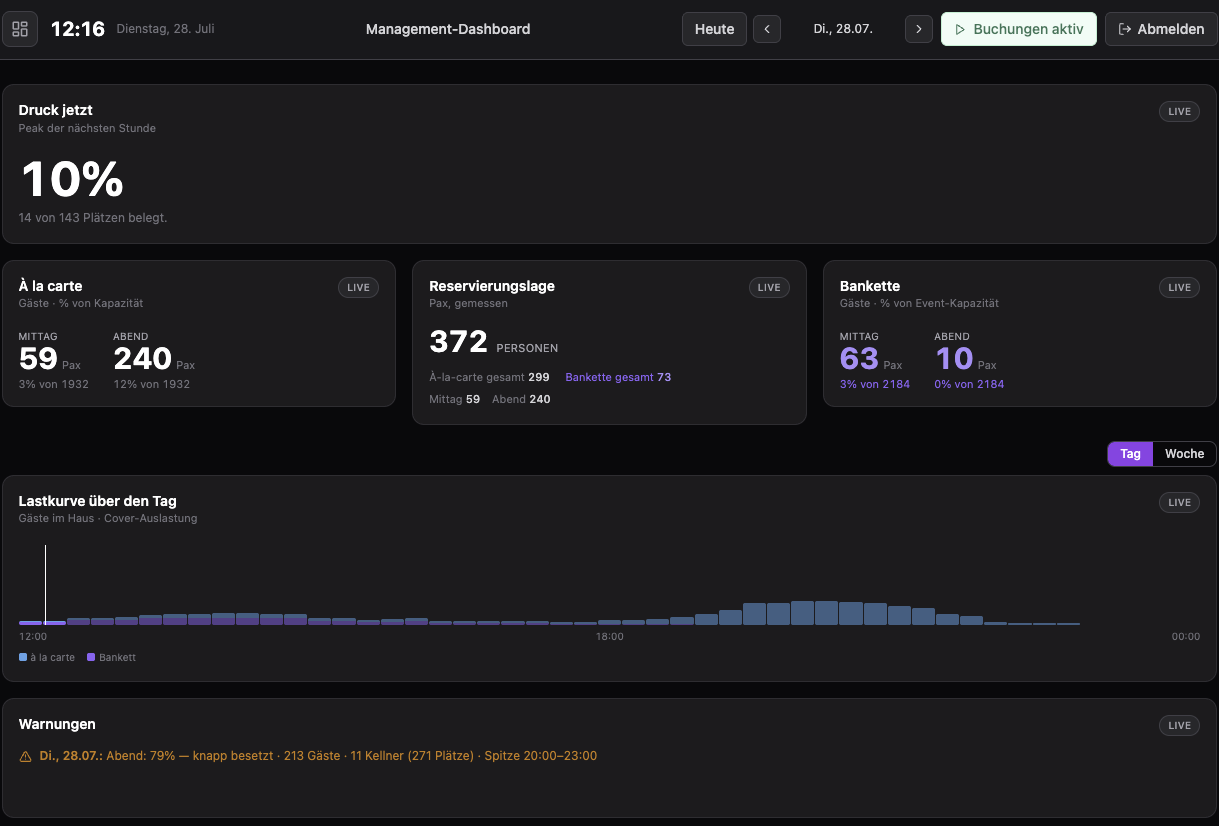
mP Table is reservations and operations in one. What used to surface only in the monthly report now runs in real time: occupancy per shift and quarter hour, capacity up to 90 days ahead, weather and staffing. Over three months, Stiftskulinarium St. Peter cut staff costs by 3 % with it - not through layoffs, but because it finally became clear when and how much staff is actually needed.
Figures from live operation at Stiftskulinarium St. Peter. Names in the views anonymised.
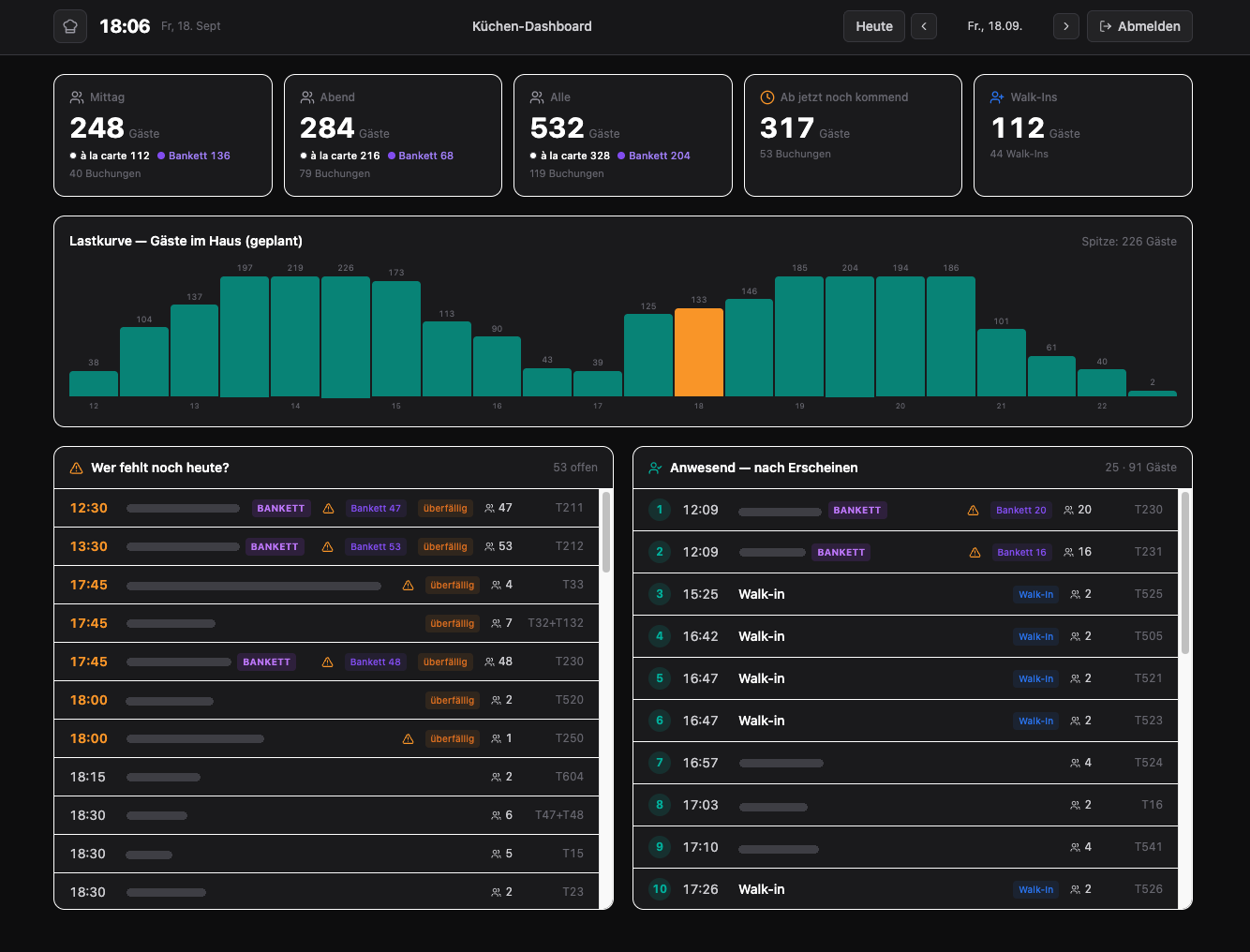
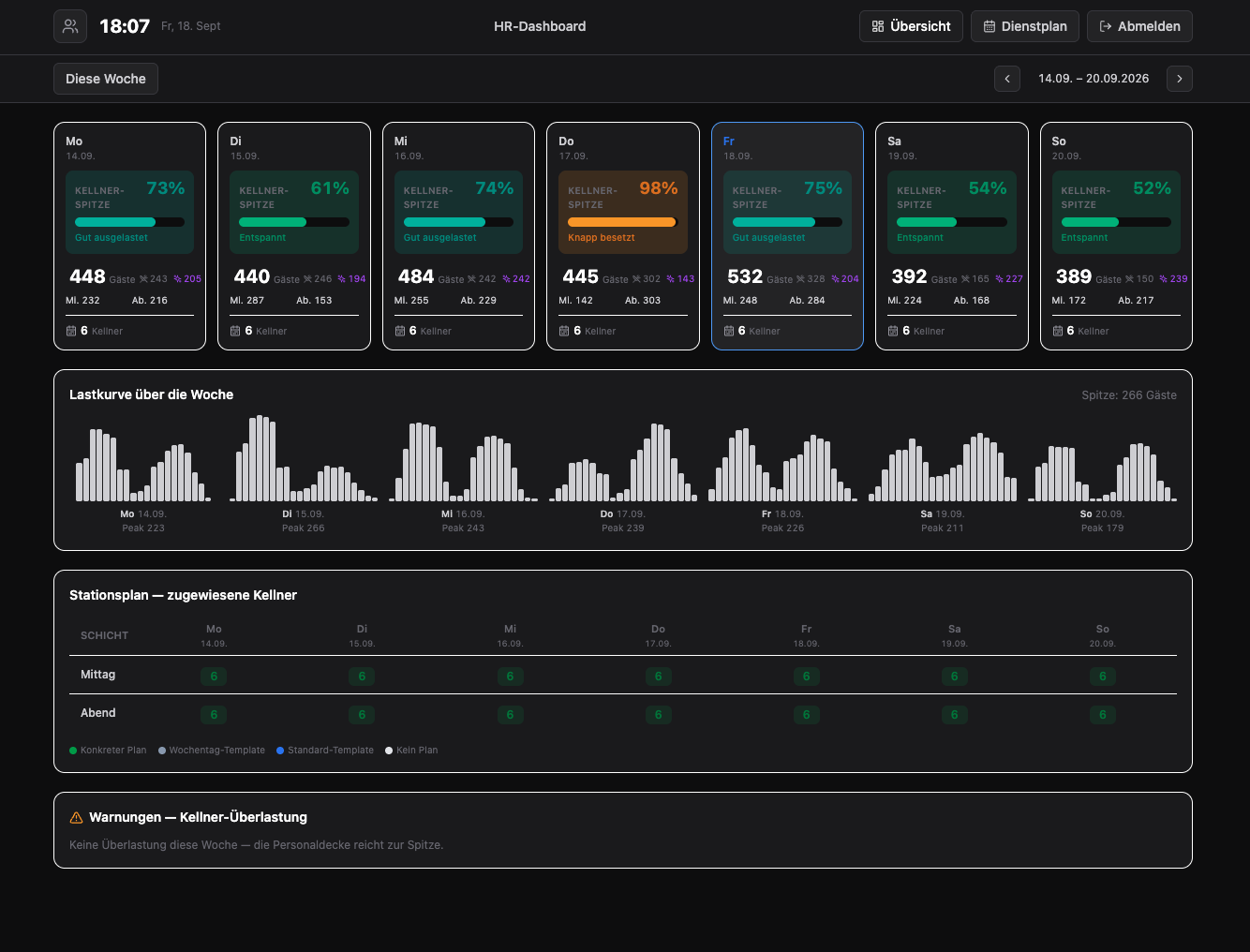
Advertising is often measured at the click, but revenue happens at the table. mP Table closes the gap: reservations from the widget report back to your ad accounts at Google and Meta, cleanly with consent. Campaigns learn from booked tables instead of clicks, and you see which ad brings guests through the door.
The new system runs alongside the old one - no risk, no blind flight. Your team settles in while operations carry on as normal.
Historical reservations and regular-guest data move into the new system. Nothing is lost, nothing is retyped.
One date, one switch. From then on everything runs on your system - proven in live operation, not in theory.
No percentage on your own guests. What you'd pay a portal stays in the house.
Card guarantee and waitlist fill the evening instead of leaving it to chance.
Vouchers bring in money before the first guest arrives - sold on your site, with no platform cut.
Bookings, guests, history belong to you. The basis for regular-guest care no one can take away.
Table plan, shift logic, groups, edge cases - the software adapts, not your operation to the software.
Data in Austria, the EU or internationally - GDPR compliance as architecture, not an afterthought checkbox.


For many venues, portals are a good start - they bring reach, at the cost of commission per booking and your data in foreign hands. If your operation doesn't fit the grid - custom table plan, custom shift logic, large groups, regulars - an own system pays off: no commission outflow, your own booking data, built around your operation. Stiftskulinarium St. Peter replaced Quandoo with it.
Yes. You decide when guests leave a card: from a group size, on certain days or in single shifts. If someone does not turn up, you decide case by case whether a fee applies. For set-menu evenings and banquets there are also deposits per person or per table.
Yes. The voucher shop runs on your site: guests buy online, pay directly and print the voucher at home. It is redeemed on the table plan by QR code or code entry, and you see sales and redemptions in the reports. There is no platform cut.
Yes. Reservations from the widget report back to your ad accounts at Google and Meta, cleanly with consent. Campaigns learn from booked tables instead of clicks, and you see which ad brings guests. Measurement is our core business as an agency, so it is built into the system itself.
Yes, as a pass in Apple Wallet or Google Wallet. On arrival one QR scan is enough for check-in, and confirmations come in your venue's design.
We run the new system in parallel, migrate historical reservations, then cut over on a chosen date. The transition is field-tested, not theoretical.
Platform tools are strong when your model fits the standard grid. Where it doesn't - custom stations, parallel shift models, special logic for groups - we build the software around the operation, not the operation around the software.
A portal costs commission per booking - permanently, tied to someone else's terms. mP Table is a one-time investment with low running costs (hosting). At what booking volume it pays off, we work out for you before anyone builds a thing. Custom software doesn't have to cost a fortune.
Wherever you want - Austria, the EU or internationally. The data belongs to you and sits on infrastructure you know. GDPR compliance is part of the architecture, not an afterthought checkbox.
No. The booking widget is embedded into your existing site - your brand, your domain. No move, no bounce of guests to a third-party portal.
It depends on table plan, shift model and data volume. The transition runs in parallel so your live operation never stops. We give you a concrete timeframe after a quick look at where you stand.